
0

Resources · Choosing Uniforms

Get the size right
before you order
thirty of them

Healthcare sizing is not standard across brands, and a uniform that does not fit gets left in a locker. How to measure, how our sizing runs, and how to try before you commit a whole team to it.

1,000+

Healthcare organisations

60,000+

Garments supplied

40+

Years experience

95%+

Client reorder rate

5.0 Google Rating
Start here

Sizing one person and sizing a team are different jobs.

One is a five-minute measurement. The other is a decision you make once for everybody, and the wrong version of it comes back as exchanges. Work out which you are doing first.

Ordering for yourself

Measure a garment you already wear

Take something the wearer likes the fit of, lay it flat, and match it to the chart. It beats measuring the body every time.

How to measure a garment
Ordering for a team

Put real sizes in front of people

Do not guess across thirty staff. A fit kit lets them choose their own size before you commit to the bulk order.

How a fit kit works

How to measure

Measure the garment, not the person.

The most reliable way to size a healthcare uniform is to take a garment the wearer already likes, lay it flat and measure it. Body measurements tell you the body. Garment measurements tell you the fit — and fit is what people actually judge.

1
Chest

Straight across from underarm seam to underarm seam, then doubled for the full chest.

2
Body length

From the highest point of the shoulder straight down to the hem. This is what decides where a tunic sits.

3
Waist

Across the relaxed waistband, then doubled. If it is elasticated, do not stretch it — measure it at rest.

4
Inseam

From the crotch seam to the hem. Tell us the shoe worn on shift: a clog and a sneaker change where the hem should land.

Size charts

The chart lives with the garment.

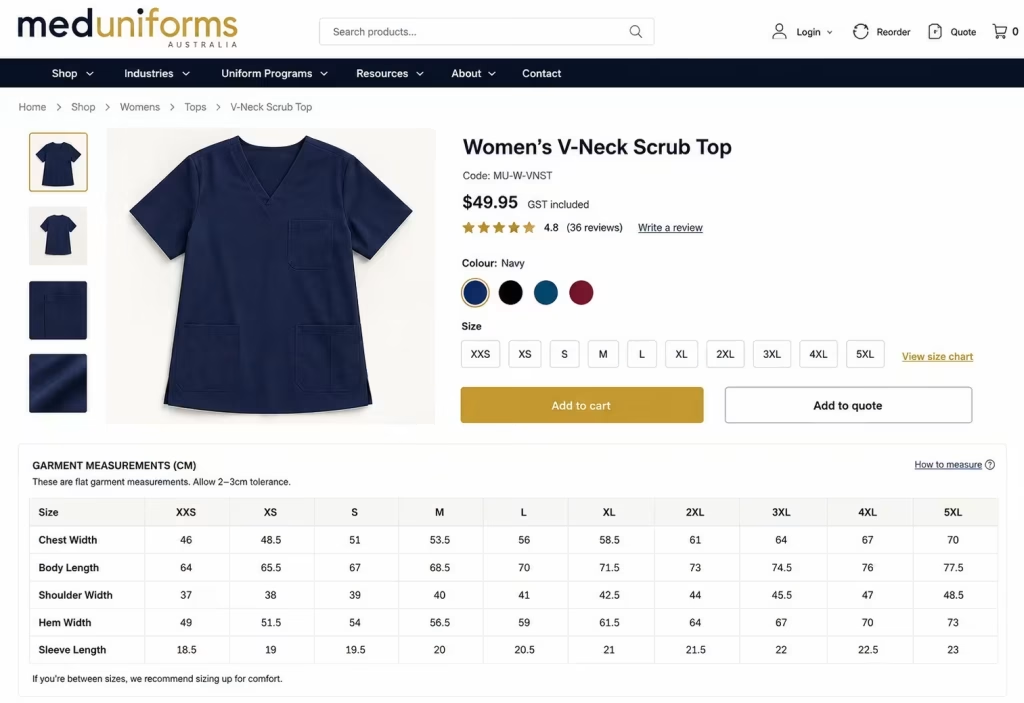
There is no single Med Uniforms size chart, because there cannot be. A stretch scrub set, a tunic and a corporate blouse are cut differently even when they carry the same letter on the label, so every product page carries the chart for that specific garment, measured flat.

Waist

Every figure is the garment measured flat. It is not the body measurement, and the two are not interchangeable.

Compare against something they own

Take the garment you measured in the last section and find the row it matches. That is a comparison, not a guess.

It lives on the product

The chart sits on the product itself, so you are never reading a general guide and hoping it applies.

Browse the range

Fit kits

Nobody guesses a
size for thirty people.

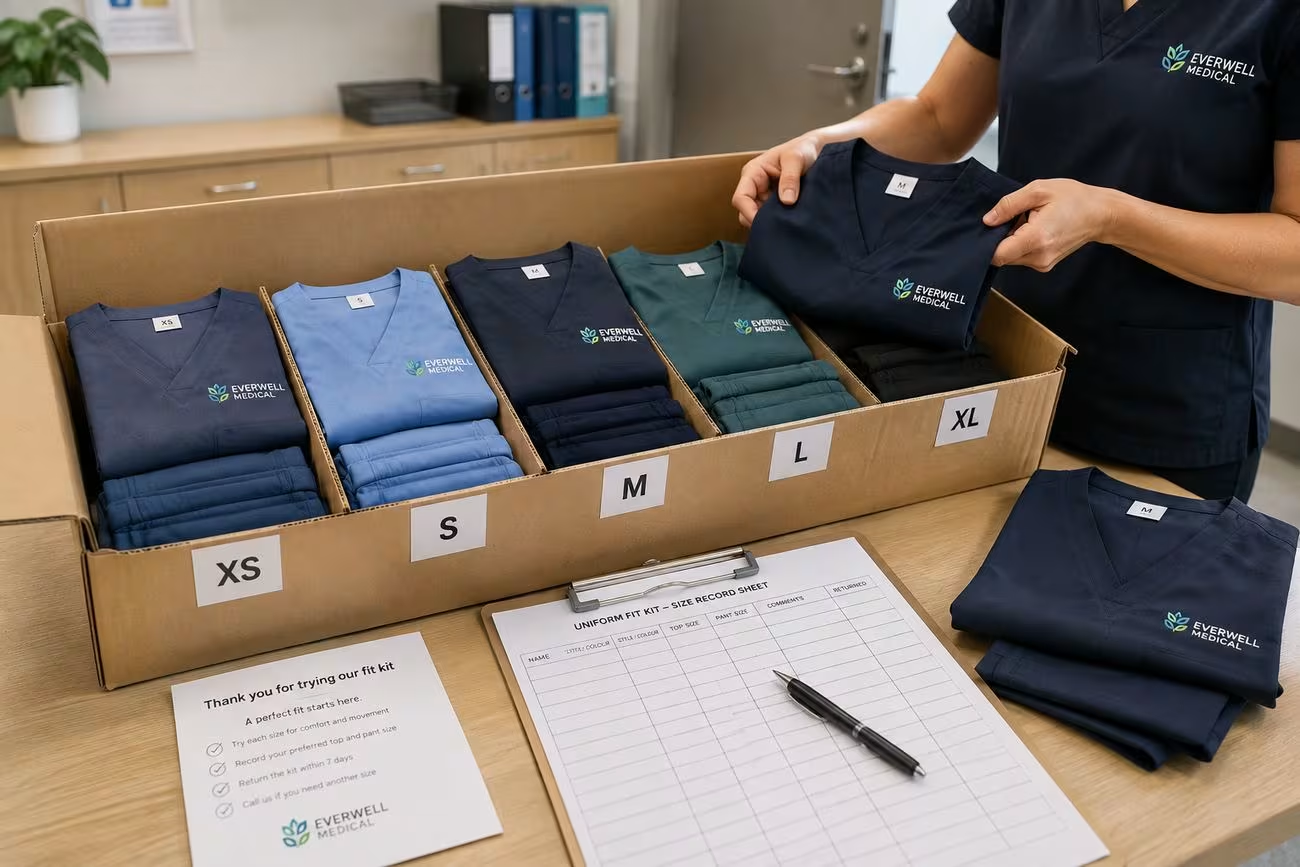
A fit kit puts real sample sizes in front of staff before anything goes into production. They try, they choose, and the order is placed against what people actually picked.

01

Tell us the garments and the range

Straight across from underarm seam to underarm seam, then doubled for the full chest.

02

The kit arrives on site

Sample sizes in the styles you chose, labelled and ready to try on over a shift.

03

Staff pick their own size

They try, they choose, you write it down. It removes the argument later.

04

Send the kit back

Return the samples in the same carton once everyone has been through it.

05

Order against real numbers

We produce to the sizes staff actually chose.

By garment

How each style is cut.

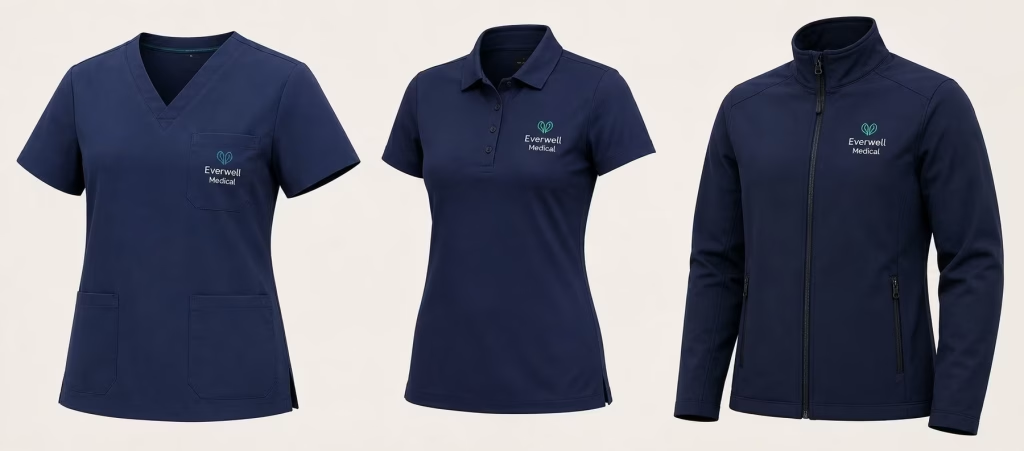
A scrub top, a corporate polo and an outer layer are not the same shape. Here is what actually changes between them, and what to check before you order.

Scrubs & tunics

Take the garment you measured in the last section and find the row it matches. That is a comparison, not a guess.

Scrubs & tunics

Take the garment you measured in the last section and find the row it matches. That is a comparison, not a guess.

Scrubs & tunics

Take the garment you measured in the last section and find the row it matches. That is a comparison, not a guess.

Footwear does not follow garment sizing — check the sizing information for the specific style before ordering.

After the first order

Sized once. Simpler every time after.

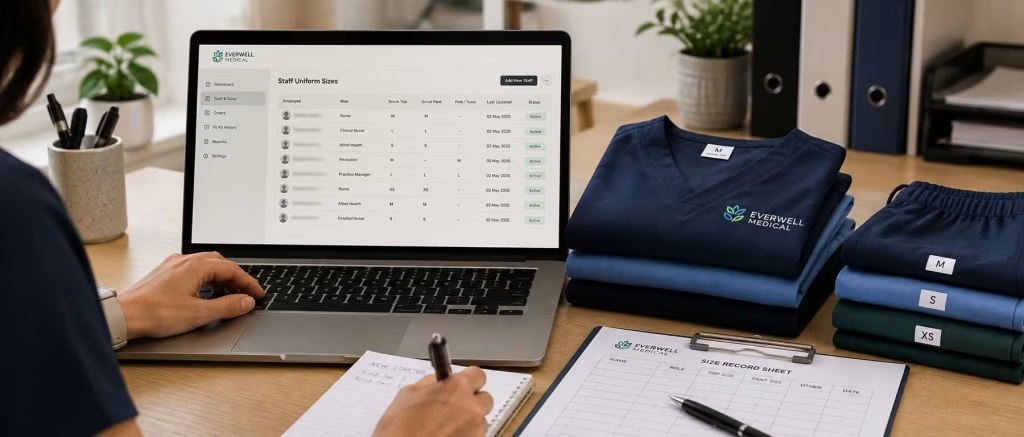
Once staff have chosen their sizes, we hold them against your account. A new starter tells you their size, you order it, and it arrives matching what everyone else is wearing. Sizes can be updated whenever they need to be — what you do not do is start from scratch every time.

Each person’s size held on record

New starters ordered against a size already on file

Replacements match the originals

Size changes updated in one place

Settled once at the start, and every reorder after that lands on the same numbers.

Before you order

Settle the sizes before the order, not after it.

Tell us the garments, the team and what you are unsure about. We will help confirm the right sizing approach — or arrange a fit kit when trying the sizes first is the safer option.

Rollouts

Rollout FAQs

It depends on how many people are changing, how many sites are involved and whether branding is part of it. Rather than working to a general number, work backwards: the changeover date is fixed, sizing has to be complete before the order, and where garments are decorated the setup has to be approved before anything goes into production. Tell us the date you have in mind and we can tell you what that means for the steps in front of it.

Both are workable and the trade-off is visibility. Changing everybody at once is cleaner to explain and shorter to live through, but leaves no room to learn. Staging by site or by role is more forgiving, but you spend a period with two uniforms in the building, which needs explaining to staff and to patients. Whichever you choose, decide it early — it changes how you sequence everything else.

Decide it before the day rather than after, because it is the question staff will ask first. The main choices are a hard stop, a short overlap, or retiring the old garments as they wear out. A hard stop is the only one that gives you a clean changeover; the others are easier on people but leave two uniforms in circulation for a while.

Size them with everybody else and set their bundle aside labelled with their name. The failure mode is leaving them out of the sizing entirely, because then they return to a team in a new uniform and start their own small rollout from scratch.

Assume a few will not, and decide in advance who makes the call on the day rather than what the options are. Whoever is running the changeover needs the authority to put someone back in the old uniform, or into a buffer size, without finding an approver first. The damage is never the garment — it is the twenty minutes spent deciding in front of a queue.

Everybody. Estimating across a team is where rollouts generate their exceptions, and exceptions on changeover day are far more expensive in goodwill than the time sizing would have taken. For a team of any size a fit kit is usually the practical way to do it, because staff choose for themselves rather than being guessed at.

One named person, with the authority to make small decisions without escalating. Rollouts generate a steady stream of minor calls — a size query, a role that was missed, someone starting next week — and they only become delays when each one has to find someone to approve it.

Yes. Tell us the changeover date you are working to, how many people and sites it covers, and whether branding is involved. Most of what we do at that point is tell you which decisions are already late.

Size & Fit Guide

×

Avery is cut for a contemporary, slightly tapered fit that flatters without restricting movement. Prefer a relaxed fit or planning to layer? Size up.

Model — Women's5'7", wearing size S
Model — Men's6'1", wearing size L
FitTrue to size, tapered body
LengthHip-length, V-neckline
Chest (CM)Body LengthSleeve
XXS81–865830.5
XS86–916031.5
S91–976232.5
M97–1026433.5
L102–1076634.5
XL107–1146835.5
2XL114–1227036.5
3XL122–1327237.5
4XL132–1427438.5