
Opens in a new tab
0
Request a Quote

Embroidery

Your organisation’s
mark, stitched in

Logo embroidery puts your identity into the garment rather than onto it — one mark, applied the same way across a team, on uniforms that are worn daily and laundered hard.

Request a Quote
Send Us Your Logo

1,000+

Healthcare organisations

60,000+

Garments supplied

40+

Years experience

95%+

Client reorder rate

5.0 Google Rating

Logo embroidery

Into the garment, not onto it.

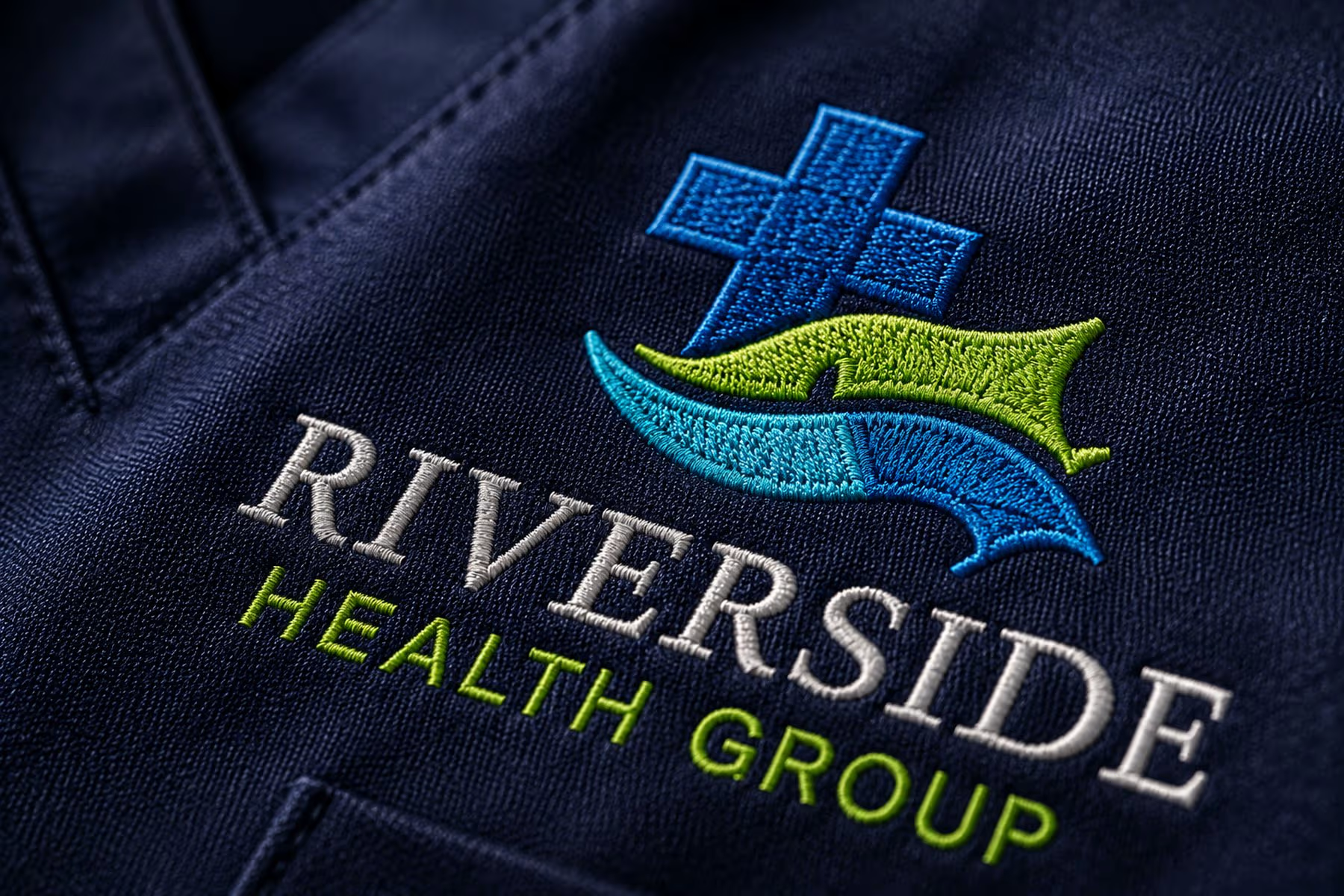
Embroidery is thread worked through the fabric. There is no printed layer sitting on the surface, nothing bonded on, and no edge to lift — the mark is part of the garment’s construction from the moment it comes off the machine.

On a healthcare uniform that matters more than it does on a promotional shirt. These garments are worn daily, laundered hard, and expected to look like the same uniform in month eighteen as they did in week one.

Why embroidery

What thread gives you that applied decoration doesn’t.

Printing, transfers and heat-applied vinyl all have their place. On a uniform that goes through a commercial wash cycle week after week, embroidery is doing something structurally different from all of them.

No applied layer

Nothing is bonded to the surface, so there is no film to crack and no edge for a wash cycle to work at.

Laundering

Thread runs through the fabric rather than sitting on it, which is the whole reason it suits the way healthcare garments are actually washed.

Texture

Stitch has depth and catches the light. It reads as a uniform rather than as merchandise, which for most organisations is the point.

Fabric range

It works across the mix a healthcare range actually contains — woven shirts, knit polos, scrubs, softshells — not one substrate.

Scale

One garment or a whole site’s order runs from the same approved setup, so the mark does not change character between them.

Nothing to maintain

Once it is stitched it is finished. There is no separate care step for the branding — look after the garment and the mark comes with it.

Nobody can promise an exact colour match in thread.

What we can promise is that you know which thread colours are proposed, and that they are confirmed with you rather than decided for you.

Colour

Thread is a physical range, not a colour picker.

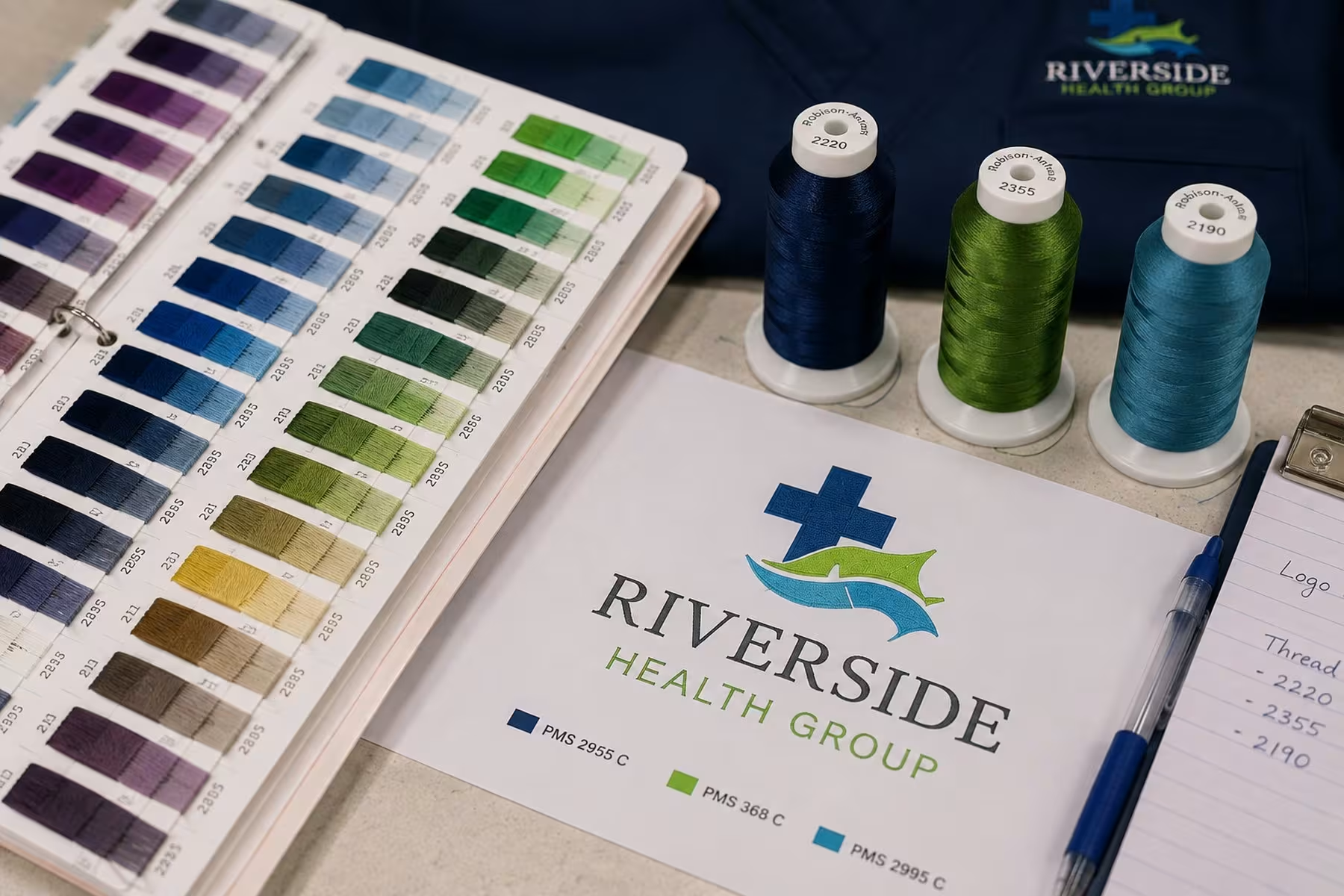
Embroidery thread comes in a fixed set of real, manufactured colours. It is not mixed to order the way ink is, so an exact match to a brand colour reference is not something anyone in this industry can honestly promise.

What happens instead is straightforward. Where brand colour references are available we use them to select the closest appropriate thread colours, and the proposed colours are confirmed with you as part of the approval process, before anything goes into production.

Size and detail

What holds in thread, and what doesn’t.

A needle and a printer resolve detail differently. Hairlines, very small lettering, tight gradients and fine internal shapes may not hold cleanly once they are stitched at the size a chest position allows — and pushing them through anyway usually produces a mark that looks worse than a simplified one would.

Where that applies to your logo we say so, explain what we would recommend adjusting and why, and leave the decision with you. Where it doesn’t — and frequently it doesn’t — the mark is prepared as supplied.

More than one mark

Logos rarely travel alone.

A uniform often carries more than the organisation’s primary mark, and the order those decisions are made in is what stops the garment looking crowded.

Settled first

The primary mark

Your organisation’s logo, at the size and position it works best at across the range. Everything else is arranged around it rather than competing with it.

Then the rest

Everything sharing the garment

A department or site name, a secondary logo for a practice within a group, an individual staff member’s name. Each is its own embroidery decision, and each affects the others.

Where individual staff names are involved, they have a page of their own.

The rest of it

Four pages, four questions.

You do not need any of this to place an order — send us the logo and we will tell you where you stand. It is here because organisations managing a uniform program usually want to know how the thing actually works.

What file to send us, and what to do when nobody can find the original artwork.

How we assess what you send and prepare it for embroidery.

How prepared artwork becomes the stitch instructions a machine actually runs.

Where the mark sits on each garment across a mixed range.

Getting started

Ready to put your logo on your uniforms?

Send the best version of your artwork you have and we will assess it, tell you plainly whether it works as supplied, and take it from there. If you are pricing a program rather than a single order, ask for a quote instead.

Logo embroidery

Logo embroidery FAQs

Yes. Organisation logos can be embroidered onto suitable garments across a healthcare range — scrubs, tunics, polos, shirts, knitwear and jackets among them.

Thread comes in a fixed physical range, so an exact match is not something anyone can promise. Where brand colour references are available we use them to select the closest appropriate thread colours and confirm the proposed colours with you as part of the approval process.

It is different rather than universally better, but on garments that are laundered as often as healthcare uniforms are, thread worked through the fabric behaves differently from a layer applied to the surface. That is usually the deciding factor.

It may be, depending on the size the mark is being stitched at. We assess it and tell you before anything is set up. Where we would recommend adjusting something we explain what and why, and the decision is yours.

Yes. Additional marks are common on healthcare uniforms. Each is its own embroidery decision, and how they sit together on the garment is worked out alongside the primary mark rather than afterwards.

Yes. Embroidery is done in our own Australian facility, and stitch files are built there too rather than being sent offshore.

Talk to us about it. Whether an existing garment is suitable depends on the garment itself, so it is worth a conversation rather than an assumption either way.

Your artwork is assessed, prepared where required, and turned into an embroidery setup. Nothing goes into production until that embroidery setup has been approved.

Size & Fit Guide

×

Avery is cut for a contemporary, slightly tapered fit that flatters without restricting movement. Prefer a relaxed fit or planning to layer? Size up.

Model — Women's5'7", wearing size S
Model — Men's6'1", wearing size L
FitTrue to size, tapered body
LengthHip-length, V-neckline
Chest (CM)Body LengthSleeve
XXS81–865830.5
XS86–916031.5
S91–976232.5
M97–1026433.5
L102–1076634.5
XL107–1146835.5
2XL114–1227036.5
3XL122–1327237.5
4XL132–1427438.5

Uniform solutions
for your healthcare team.

Quality
Uniforms
Fit for
Your Team
Ongoing
Support
Request a Quote

Tell us about your
uniform needs

Whether you’re ordering for a small practice or a larger healthcare organisation, send us a few details and we’ll get back to you.

Number of staff
We'll only use these details to respond to your quote request.
OR

Prefer to talk? Call 1300 736 665

Our team will be in touch shortly to discuss your requirements.