0
Request a Quote

Veterinary · What customers tell us

What veterinary practices
tell us

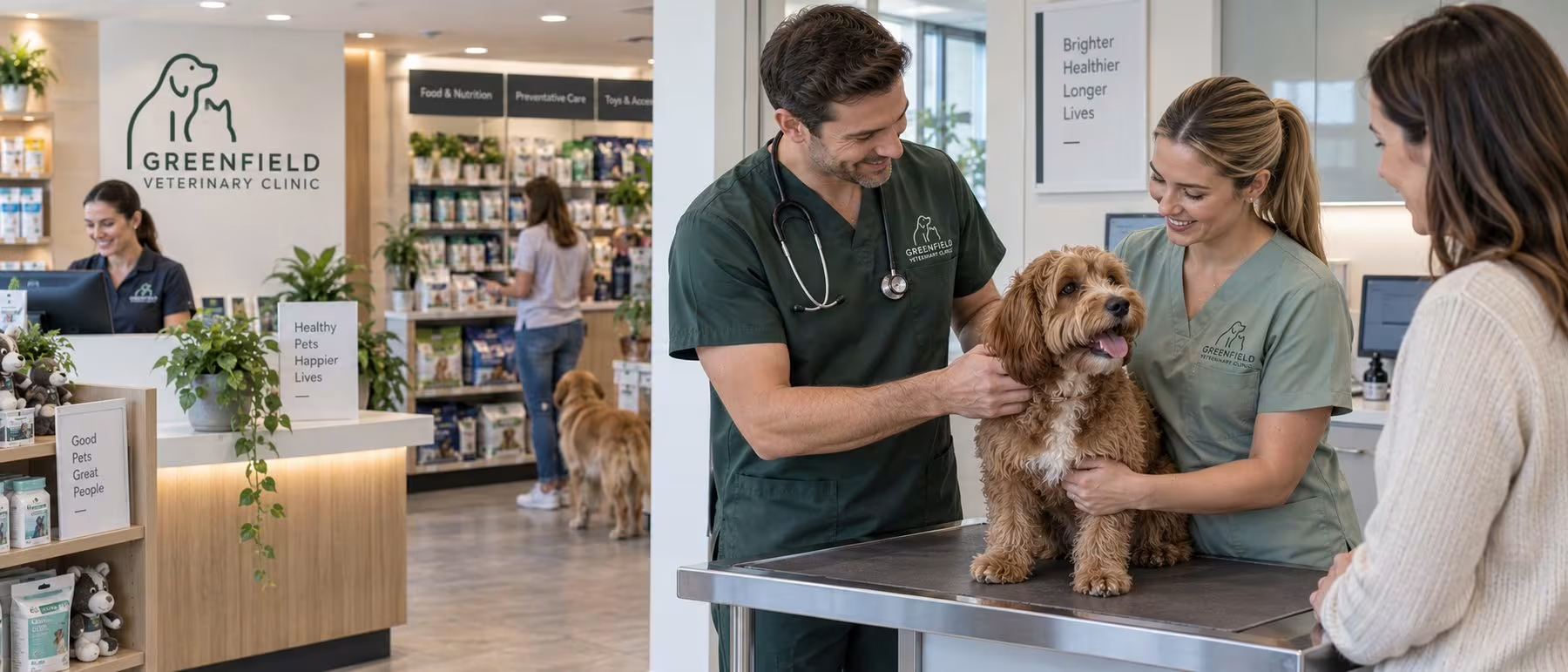
We supply uniforms to veterinary practices and animal hospitals across Australia. These are the most physical conversations we have. Almost nothing gets raised about how the uniform looks and almost everything gets raised about what happens to it — how fast it wears, what a bad appointment does to it, and what replacing it costs over a year. This is what they actually say.

1,000+

Healthcare organisations

60,000+

Garments supplied

40+

Years experience

95%+

Client reorder rate

5.0 Google Rating
Aged care
Groups and single homes, nationally

The pattern

The first order is the cheap part.

Most veterinary practices have bought uniforms before. What they usually have not done is worked out what the replacements cost, because those arrive a few garments at a time, months apart, and never land in one place as a number.

Practices tell us the conversation changes the moment somebody adds up a year of ad-hoc replacements. It is almost never the first order that surprises them.

What they tell us

Five things veterinary practices raise, nearly every time.

Drawn from the conversations we have with veterinary practices and animal hospitals rather than from any one organisation. Where a single client has said something better than we could, their story sits on its own page with their name on it and their approval behind it.

Replacement is the budget line. The first order isn’t.

Garments in a veterinary practice have a working life measured in months rather than years, and the replacements arrive two and three at a time across a year. Practices tell us that spend was invisible until somebody totalled it — and that once they had, the way they bought changed completely.

Half the building is a shop.

A vet practice runs a clinical team and a retail counter in the same room, often with the same people moving between them. The uniform has to work behind a counter selling food and in a consult room ten minutes later. No other sector we supply puts those two jobs in one garment.

One appointment can write a garment off.

An anxious dog, a difficult procedure, or one badly timed moment, and a top is finished for the day. Practices tell us the useful question is not how durable the garment is but whether somebody can change into a clean one without going home.

Nobody wants to take the day home.

Changing at the practice comes up in nearly every conversation. Staff would rather leave the day at work than carry it into the car, and practices tell us that shapes how many garments each person needs more than anything else does.

There is no clean role.

In most workplaces you can dress the front desk differently because the front desk stays clean. In a vet practice everybody ends up holding an animal eventually — the receptionist included. Practices tell us that is why dressing roles differently rarely survives contact with a busy Saturday.

What usually changes

The same four moves, in the same order.

Not a methodology — just what veterinary practices tend to do once they decide to settle it, described without the numbers that only belong to the practice they came from.

01
Costed as an annual line, not a one-off order

Because that is what it actually is. Practices that switched to thinking about it this way tell us it was the decision that made everything after it obvious.

02
Chosen for what the day does to it

Fabric and colour picked against hair, wear and repeated washing rather than against a swatch. The garment that looks best in a catalogue is rarely the one still in service at Christmas.

03
A spare set kept at the practice

So a written-off top at eleven in the morning is a two-minute problem rather than the rest of the day.

04
One garment family across clinical and retail

Differentiated lightly rather than split into two uniforms, because the same people cross between them all day.

How these are made

Nothing here is written by us and signed by them.

The order matters. We interview, we transcribe, we cut for length, and then they read it before anyone else does. If they want a line out, it comes out — and if they change their mind after publication, the story comes down the same day.

A recorded interview, not a form

Cut for length, never rewritten for tone

Read and approved before publishing

Figures from their records, not ours

Named with permission, anonymous on request

Withdrawn on request, without discussion

Tell us yours

If you'd rather just talk, call us.

You don’t have to have a dramatic story. “It turns up and it fits” is a story, and it’s the one most people are actually trying to buy.

1300 736 665
Mon–Fri, 8:30am–5pm AEST

A forty-minute conversation, recorded

You read and approve it before it’s published

Anonymous is fine, and so is changing your mind

Nothing is offered in exchange

Sending this isn’t consent to publish. Nothing goes on the site until you’ve read the final text and approved it in writing — and it comes down again the day you ask.

Size & Fit Guide

×

Avery is cut for a contemporary, slightly tapered fit that flatters without restricting movement. Prefer a relaxed fit or planning to layer? Size up.

Model — Women's5'7", wearing size S
Model — Men's6'1", wearing size L
FitTrue to size, tapered body
LengthHip-length, V-neckline
Chest (CM)Body LengthSleeve
XXS81–865830.5
XS86–916031.5
S91–976232.5
M97–1026433.5
L102–1076634.5
XL107–1146835.5
2XL114–1227036.5
3XL122–1327237.5
4XL132–1427438.5

Uniform solutions
for your healthcare team.

Quality
Uniforms
Fit for
Your Team
Ongoing
Support
Request a Quote

Tell us about your
uniform needs

Whether you’re ordering for a small practice or a larger healthcare organisation, send us a few details and we’ll get back to you.

Number of staff
We'll only use these details to respond to your quote request.
OR

Prefer to talk? Call 1300 736 665

Our team will be in touch shortly to discuss your requirements.